FAQ
Asphalt Paving Frequently Asked Questions (FAQ)
Find expert answers to common questions about asphalt driveway costs, maintenance timelines, and chip-sealing. Serving Rocky Mount and Martinsville, VA.
What is the difference between asphalt and concrete?
Asphalt is a bituminous mixture and is semi-flexible under the load of traffic. This flexibility allows asphalt to contract and expand under stress from repeat traffic. Asphalt is generally easier and cheaper to repair than concrete.
Concrete is rigid and is best used in areas where heavy vehicles will be parked and loaded. Concrete offers stronger resistance against downward pressure.
We have ability to quote both concrete and asphalt for your needs.
Is chip-sealing a good option for me?
Chip-sealing, or tar and gravel, is an economical alternative to asphalt, but usually is reserved for longer roadways, farms/industrial sites, or roads that aren’t used heavily. Asphalt emulsion and rock (in descending gradations) combine to produce a drivable surface. Chip-sealing usually requires more maintenance than asphalt and is labor intensive when installed compared to asphalt.
What is needed to produce a long-lasting drivable surface?
The life of your project begins with a solid sub-grade and determines how long your construction performs. We believe this is vital and we make sure base conditions are met. Once solid conditions are met, industry determines standard duty course of 6” of crushed aggregate base course and 2” of asphalt. 4” of crushed aggregate base course and 2” of asphalt is considered light duty but is generally suitable for residential use. Heavy duty paving courses require thicker amounts of stone and asphalt, and even layers of different asphalt mix types.
How can I figure out the area of my project?
Area is measured in length x width, and this sum is represented by square feet. Add areas together to come up with total square feet. The square feet sum can easily be divided by “9” to determine square yards. Precise and accurate measuring avoids costly material overruns and underruns and helps us get you the right price. Measuring more than one area requires breaking areas down in rectangles and any triangles. Triangles are measured length x width x .5, again providing a square feet unit of measure.
Which aggregate works best for my needs?
Driveways and roadways require a solid base to be effective. New roads and base layers are usually constructed with crusher run aggregate, because the sand/fines help to hold aggregate in place after compaction. Usually, 57 stone is used to top dress over crusher run base.
Rip-Rap stone is available in 4 graduating sizes and can be extremely helpful when placed on slopes, eroding/undermining areas, and is efficient in slowing water velocity. It can also produce a nice aesthetic when placed in ditches or around pipe inlets and outlets.
How is asphalt 100% recyclable?
Asphalt is removed from roadways and crushed to a size that meets requirements. It is then added back to the asphalt manufacturing process, where it is heated and remixed into asphalt, making asphalt a green product.
What can I expect during construction?
Unfortunately, there will be some disruption to your routine, however we limit the disruption as much as possible. You can expect a knowledgeable, professional, and courteous crew that arrive motivated to perform your work in a neat and timely fashion. We pride ourselves on being good stewards of your property.
When has asphalt cured?
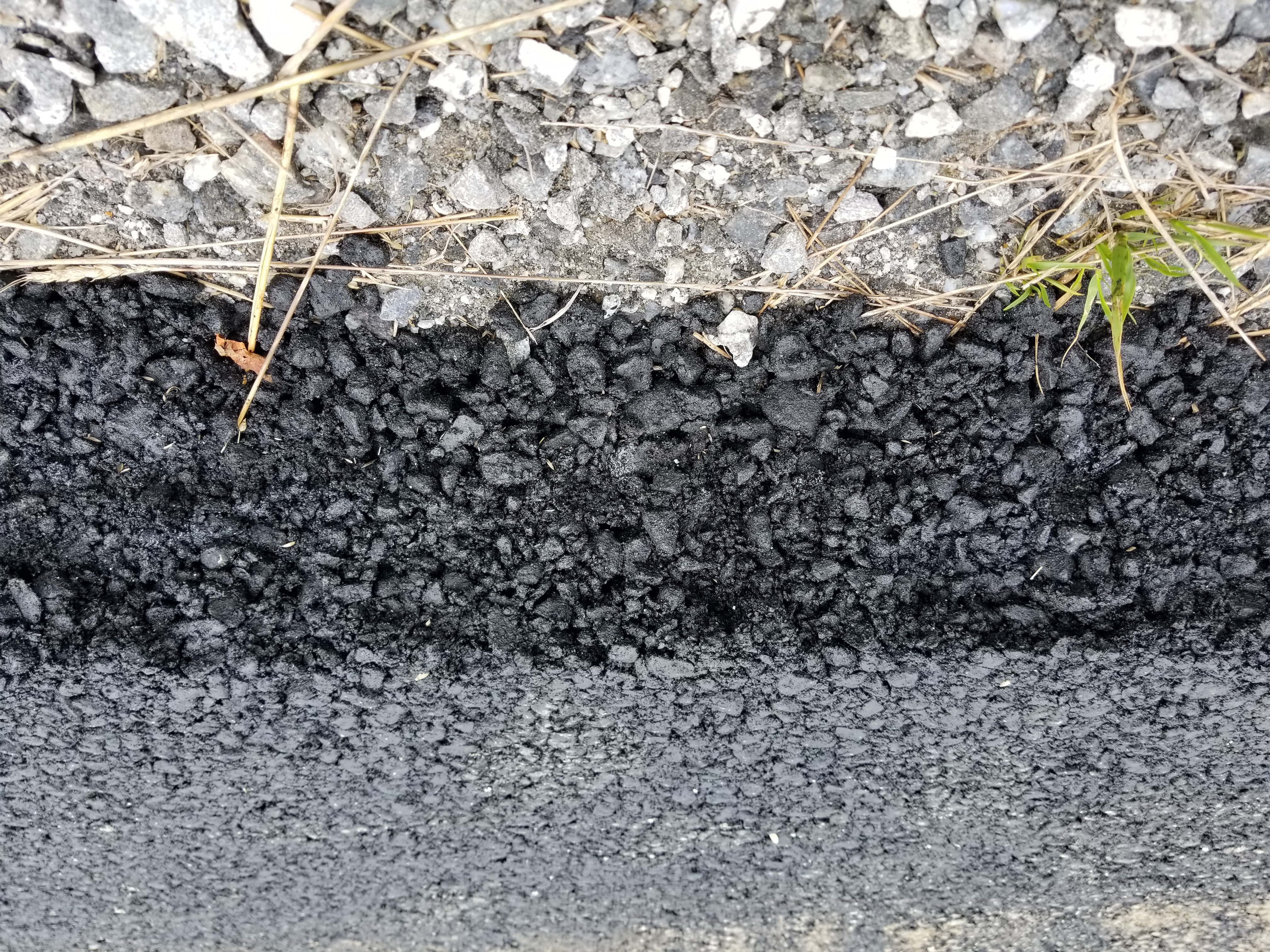
Weather and temperature play a big factor in the curing process. New place asphalt will show seams/joints where it has been put together, and some rocks will be lost along edges. New asphalt is very susceptible to power steering impressions when vehicle is not in motion. It is also susceptible for concentrated pressures like a trailer jack or motorcycle kick stand, and a weight displacing block should be used. These minor issues will iron out over time with warmer weather and traffic continuing to slightly knead the asphalt. In cooler weather, we recommend staying off finished surface for 3 days, and 1 week for warmer seasons. In extreme heat, asphalt can soften a bit so consider this during the summer months.
How do I care for my asphalt surface?
This one is easy, call us! Limiting spills of oils, fuels, cleaners, etc. is important. We recommend crack sealing any cracks as they appear, and adding a sealcoat as maintenance requires. Generally, asphalt can be sealed 3 to 6 months after completed, and within the first 2 years of the completed work.
What’s the best way to get extended value out of my project?
Water control is very important to the longevity of the project. We look for water issues, and design corrections within the work to better protect your investment.
My project is complicated. Can you offer custom design, solutions, and specialty needs?
Yes, we are your company for that. With our diverse portfolio of work, we have experience in custom and specialty work, positioning us as a top choice for your complex project. With long-standing subcontractor relationships, we can bring those resources to your project for a variety of complex tasks.
If athletics are your thing, we can build and rehab tennis courts, pickleball courts, cart paths, athletic tracks, etc.
How much can I expect to spend on my project?
Asphalt construction is an investment and brings real value and equity to your property. However, asphalt construction can be expensive and has been susceptible to rising costs. Many repair and patching jobs are within a range of $5,000 and $20,000. Most residential and small commercial projects cost between $20,000 and $50,000, while larger projects can be between $50,000 and $100,000. Larger commercial projects can exceed $100,000, but all depend on specific factors and variables. For a better idea of cost for what you’re looking for, use our free tool featured below.